Recent Publications:
c 2026 Reno Wellness Smile Studio
web.master@renowellnesssmilestudio.com
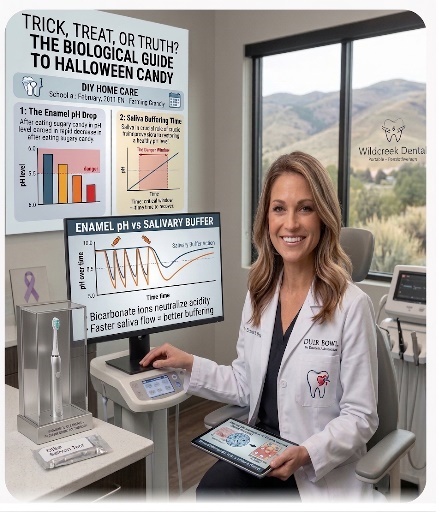
In the high-desert environment of northern Nevada, dry seasonal air already challenges our oral mucous membranes, and the annual surge of Halloween sugar creates a perfect storm for tooth decay. While conventional dental advice simply tells you to stop eating candy altogether, biological dentistry recognizes that total avoidance is not realistic. The true culprit is not just sugar itself: it is the prolonged drop in oral pH that strips away essential minerals. By understanding the biochemical mechanisms behind acid erosion, you can enjoy seasonal treats while protecting your tooth structure.
pH Drop vs. Contact Time:
Sticky Candies Cause Long-Term Demineralization Not all sugar damages enamel equally. Tooth enamel begins to demineralize the moment oral pH drops below 5.5. While chocolate clears the mouth quickly, sticky gummies, caramels, and sour chews pose a double threat. Sour candies often carry an acidic pH as low as 2.0, instantly stripping surface minerals, while sticky textures adhere to deep occlusal grooves and interdental spaces. This prolongs bacterial acid production for hours after consumption. From a biomimetic perspective, minimizing contact time and choosing fast-clearing treats is far more critical than simply counting calories or grams of sugar consumed.
The Salivary Buffer:
Why Mealtime Timing Beats Constant Grazing
Your body possesses a natural defense system against enamel erosion: saliva rich in calcium, phosphate, and bicarbonate ions. Grazing on Halloween candy throughout the day keeps your oral pH chronically depressed, completely exhausting your saliva's buffering capacity. However, eating treats immediately following a balanced meal leverages the natural surge in salivary flow produced during chewing. This accelerated salivary turnover rapidly neutralizes dietary acids, restores a healthy oral microbiome, and delivers vital minerals back to the enamel matrix before permanent micro-fractures and structural decay can take root.
Immediate Brushing Backfires:
The Biological Case for Delayed CleaningAggressively reaching for your toothbrush right after eating acidic Halloween candy actually accelerates enamel destruction. When acid lowers your oral pH, the outer layer of enamel becomes temporarily softened and vulnerable. Brushing immediately acts like sandpaper against this weakened biological surface, scrubbing away softened minerals before they can recover. Instead, the biomimetic approach calls for immediate swishing with plain water or a dilute baking soda rinse to neutralize acidity. Waiting 30 to 45 minutes gives your natural salivary flow the critical time needed to re-harden enamel before mechanical cleaning begins.
Why Brushing Still MattersScientific facts show that brushing your teeth will not stop or cure Alzheimer’s disease. However, taking care of your mouth is still very important for your health! Your teeth are meant to last your whole life. Brushing twice a day, flossing, and visiting your dentist helps prevent tooth pain, cavities, and gum problems. A bottle of water after lunch is more important than chewing gum. Even if brushing your teeth cannot protect your brain from memory diseases, keeping up with your daily dental care ensures your smile stays strong, healthy, and working well for your entire life.
Recent Publications:
c 2026 Reno Wellness Smile Studio
web.master@renowellnesssmilestudio.com